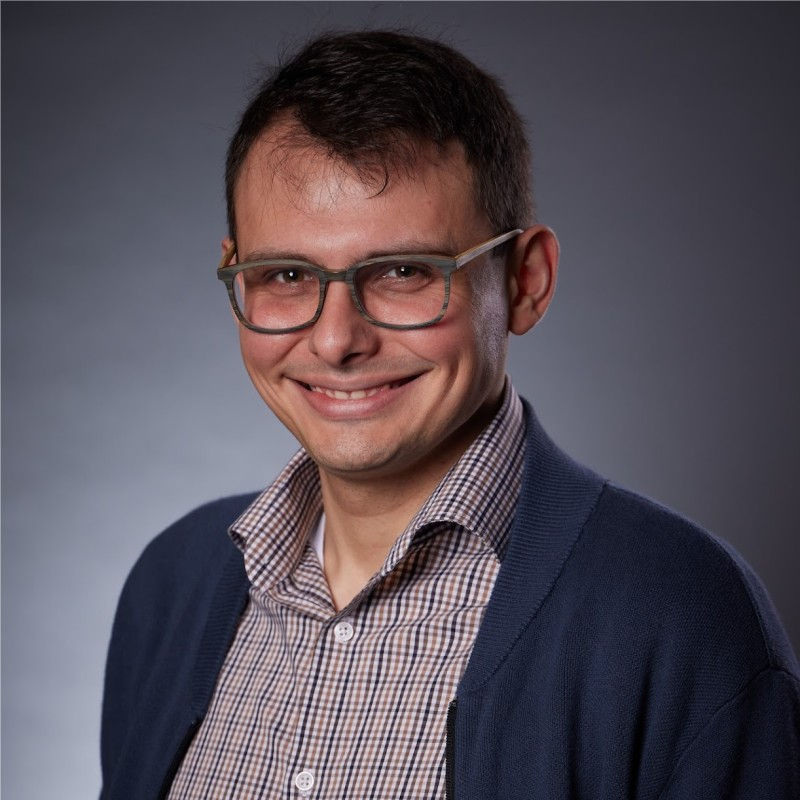
Member Highlight: Roberto Gómez

Updated: May 11

Please introduce yourself.
Hello! My name is Roberto Gómez. I’m from Mexico and I moved to Boston in 2019. In 2021 I joined the JSB community and, since 2024, I host JSB's film club.
What is your connection to Japan?
As any average kid back in the 80’s, I watched several animated cartoons created by or produced by Japanese creators and studios. I wasn’t aware of this connection yet. Then, I attended a Mexican-Japanese middle school, where I experienced many aspects of Japanese culture (language, food, festivals). But, to be honest, I did not fully appreciate it at the time. It was only years later that my conscious interest in Japan arose, especially from its literature and cinema, but also from martial arts. Then my attention was drawn to Japanese cuisine, zen philosophy, music, and minimalism. My passion and interest for Japan and its culture has nothing but increased since.
What are you passionate about?
I am passionate about languages, in a broad sense, be them natural—Spanish, English, French, Japanese—or technical and artistic—mathematics, music, architecture, painting. I enjoy nature, a good meal, hearty conversations, and a meaningful book.
What drew you to JSB?
During the pandemic, I was constantly looking for online activities, especially literary and cultural ones. I looked around in bookstores and cultural centers’ websites. That’s how I discovered Boston’s cosmopolitanism; first and foremost, the Japan Society of Boston, as well as many others like the French Library, the Dante Alighieri Society of Massachusetts, and the Goethe-Institut. I was gladly surprised by the array of activities taking place in spite of the lockdown. I was immediately attracted to the book club, so I became a member without hesitation. It has been one of the staples of my life in the US. I was happy to find a new point of entry to Japan and to Japanese culture.
We have you to thank for initiating the JSB Film Club and leading it since 2024. What are some of your favorite Japanese films?
The pleasure has been all mine, I can assure you. I am very grateful to Naoko Takayanagi for materializing an on-the-spot suggestion during a member’s gathering, and to Jessy LeClair for extending the trust on my ability to host the film club.
Regarding my favorite films, tough question! Japanese cinema has a long and rich history, full of excellent films that cover a vast array of genres and styles. Almost any film by Hirokazu Kore-eda stands on my top list ---so far we have discussed Like Father, Like Son and Monster in the film club. I’m convinced that Hayao Miyazaki is one of the greatest directors, not only for his technical accomplishments, but especially for his ability to convey hope and courage in a complex and often cruel world, especially in The Wind Rises.
Looking for newer films to present, I encountered the works of Rysuke Hamaguchi (Drive My Car) and Kiyoshi Kurosawa (Tokyo Sonata). I would also place Tampopo, by Juzo Itami, very high on the list. It’s one of the best films on food, a key aspect to truly immerse oneself into any culture.
Soundtracks deserve a special mention. It is not rare for me to praise a film’s music as its best attribute. Composers such as Joe Hisaishi, Toru Takemitsu and Ryuichi Sakamoto have elevated the cinematographic experience to new summits.
Do you have any fond memories of JSB events to share?
The first activity I enrolled in was the book club. I was very happy to find it because that was exactly what I was looking for at that moment. It has become one of my favorite activities. I think I have missed only a couple of sessions in all. The club’s host at the time, Remy Kaldawy, had just started leading it. He made the experience even more enjoyable. In time, we discovered a common passion for Yukio Mishima.
Another fond memory is the shakuhachi recital that Elizabeth Bennett gave in September 2022. I was so impressed by it that many months later I ended up buying a second-hand shakuhachi. It’s so hard to achieve a stable and uniform tone! But even if you don’t manage to play fluently, you can use it to meditate.
The Ouchigohan series is great to dive in classical Japanese dishes.
I also enjoyed the guided tours through the MFA’s Japanese art galleries a lot, especially the exhibition devoted to the Great Wave, by Hokusai.
I enjoyed the Hokkaido Fair very much because the program included films, food, and ad hoc merchandise. Thanks to it, I discovered Miraku, which ended up being one of my favorite restaurants in Boston.
Thank you, Roberto, for sharing with us!
JSB members can learn more about the film club and the films we've discussed on our blog! Visit the Member Portal for the passcode.
Interested in becoming a JSB Member? Click here or reach out to info@japansocietyboston.org for more details.