


Member Highlight: Dan Lowe
- Japan Society of Boston

- 13 hours ago
- 5 min read
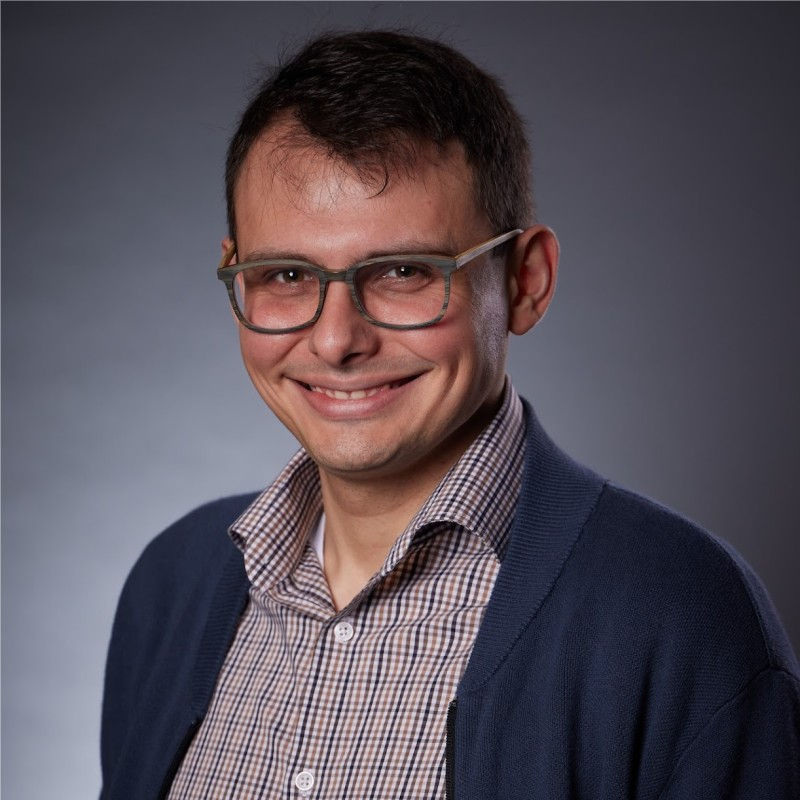
Please introduce yourself and your connection to Japan.
Have you noticed how much harder it is to learn Japanese once you're working full time? I built JapaneseCircle.com so JET alums and other professionals can make every learning hour count, improving their Japanese in outcome-oriented sprints.
My interest in Japan started in third-grade social studies and hasn't let up in 30 years. A high school trip pushed me to study Japanese seriously, first in college, then a summer of intensive Japanese at Harvard and a year abroad at Sophia University. After two years on the JET Program in Kujukuri, Chiba, I earned a business Japanese certification at Waseda and joined Showa Boston Institute, where I managed college exchanges and social media marketing, drawn by the chance to help students study abroad.
While at Showa Boston I earned an MBA in entrepreneurship from Babson and founded Boston Intercultural Consulting to help U.S. and Japan teams collaborate and to support Japan-connected founders entering the U.S. market. After three years in product strategy consulting, I launched JapaneseCircle.com. Along the way I served as president of the New England JET Alumni Association and represented 35,000 U.S. JET alumni as JET Alumni Association USA Country Representative.
You have supported organizations ranging from Japanese corporations to Boston-area universities. Where did you find the biggest cultural or communication gaps were, and how did you navigate them?
The largest gap I see comes from mistaken priorities. Teams looking to learn how to bow correctly might avoid a challenging but necessary conversation, face a lack of trust, or work within a broken team operating model. Etiquette matters, and chopsticks standing upright in a rice bowl is both distracting and reads as a lack of commitment to Japan, but a team can fix 80% of those habits with an afternoon of free YouTube videos and discussion.
The more impactful gaps are the ones I map with a ladder framework I call COAST: Customs, Order, Ambiguity, Sensitivity, and Trust. Customs is only the first rung, and where etiquette lives. Order is about hierarchy and decision authority, so teams learn to communicate across it instead of bypassing senior stakeholders. Ambiguity establishes quantified vocabulary, because words like "maybe," "possibly," even "yes" and "no" carry wildly different odds of actually happening, and that holds true even among native English speakers. Sensitivity is raising disagreement without damaging the relationship, through psychological safety and radical candor. Trust is the long-term investment that keeps a partnership from stalling out as transactional.
Depending on the team need, COAST's output is a co-created 90-day roadmap or team playbook, built from a dozen interviews and a day-and-a-half alignment session.
What led you to start JapaneseCircle.com, and how have you seen it evolve since its conception?
I built JapaneseCircle.com to serve as a workout program for your Japanese-learning brain.
While Boston Intercultural supports teams, JapaneseCircle is the direct result of my regular one-on-ones with JET alumni, my own Japanese learning journey, and a product background that emphasizes talking to the user. Through these conversations, I learned that most JETs want to keep learning Japanese, but most adult education classes meet only once a week. JETs living in Japan can get away with passive study because they use the language every day. Focusing on Anki flashcards, textbooks, weekly classes, and Duolingo back in the US leaves that learning equation unbalanced, because the daily need to use Japanese is gone. It's like going to the gym and lifting weights with no real plan.
Critically, I spoke with JETs who passed JLPT N1 or N2 after the program and found they shared three habits: they surrounded themselves with growth-minded Japanese learners, they actively produced the language through speaking and writing, and they received immediate feedback on what they produced. Those are the three pillars JapaneseCircle is built on.
As we’ve grown, we’re working on our third iteration. The first built accountability through focus rooms and weekly check-ins. The second added language exchanges and writing challenges, including a twelve-week series called Imibukai that pushed learners past endless self-introductions into meaningful topics. The third centers on speaking and writing drills, with a growing team of drill leads so we can support learners across time zones. My goal is to eventually deliver the best possible learning experience to 10,000 learners.
How did your experience with the JET Program uniquely position you to support JET alumni throughout your career?
Every JET alum has a unique way to give back, and mine comes from product and consulting. As a JETAAUSA country representative, I tried to avoid projecting my own experience or telling a chapter something they already knew. Instead, I shared frameworks to help chapter leaders learn what mattered most to their members, and then prioritize the most meaningful experience and outcomes to offer.
Locally, I've partnered with the Consulate General of Japan to lead most of New England's orientation Q&A sessions for over a decade. As part of the session, I challenge new JETs to set the tone in the first three weeks by thinking in experiments. A "let's try" lesson idea is more welcome than a radical change, and even when declined the JET signals they want to have a positive impact in a respectful way. I also offer frameworks for suggesting standing meetings with the Japanese Teachers of English to identify the ideal experience and outcome for each learning module. Finally, I encourage JETs to invite feedback, framed as keepers and improvers.

You've reached 40 out of 47 Japanese prefectures, partly on a folding bike. What has traveling that way taught you about Japan that you couldn't have learned otherwise?
I'm happy to report that I just got back from Niigata and Gunma, leaving only Okayama, Shimane, Tottori, Yamaguchi, and Okinawa, though I need to admit not all of it has been on the folding bike. The biggest lesson is that committing to all of Japan, not just Kansai and Kanto, has transformed my professional relationships. When a colleague mentions they're originally from Miyazaki or Saga and you can name your favorite food from there, it goes a long way toward showing investment in Japan as a whole.
What led you to join the Japan Society of Boston? Are there any programs or activities you are particularly interested to be part of?
Born and raised in Jamaica Plain, I see a natural overlap between the Japan Society's mission and my own work building ziplines between Boston and Japan. I'm intentional about surrounding myself with growth-minded people connected to Japan, and JSB is one of the best places in the city to do that. I'm especially drawn to programs that bring the two communities together in person, and I'd be glad to contribute wherever language learning, cross-cultural training, or the JET alumni network can help.
Thank you, Dan, for sharing with us!
JSB members can receive 10% off all offerings at JapaneseCircle.com! Visit the Member Portal for all the info.
Interested in becoming a JSB Member? Click here or reach out to info@japansocietyboston.org for more details.


